
It is a few days to Christmas, the memorial and celebrations of the birth of Jesus whom the church’s faith, belief and dogma are based on and whose life is exemplified in the church’s traditions. Christianity is a way of Christ. As some schools of thought believe, Christianity should not be regarded as a religion but a culture anchored on the principles demonstrated by Jesus.
Within the Christian faith are denominations each carved from the Catholic Church. There is belief that the Catholic Church came directly from Jesus when he transferred the authority of the church to St. Peter, the church in Vatican City in Rome – the tomb of St. Peter is located under the main altar of the Vatican Basilica, which is exemplified by the name St. Peter’s Basilica. The St Peter’s Basilica is the head of the Catholic church where the church is administered from by the Pope. The Pope is seen as the successor of Peter.
The Pope, as taught to us when we were young, is infallible and any decision made by him as the leader of the church and pontiff, seated as the ecclesiastical authority or when he speaks ex cathedra, is incontrovertible. It is seen as final and unblemished. The Catholic church at the same time is adjudged infallible which the gate of hell will not overcome. The church’s laws and reforms are adjudicated by the Synod or the Ecumenical Council.
The Catholic Church has well defined beliefs and traditions which are held tight over the centuries. These beliefs have held the church which is hierarchical and its faithful, together.
Over the decades that I have lived as a Catholic, and in recent times that there has been a concurrency of secularism and liberalism fighting to destroy Christianity, I have always believed that the Catholic Church will be the bastion and the bulwark of Christianity which the secular wave will not affect and overcome. The Catholic Church in the last few years has been in turmoil as regards church’s teaching and interpretation of marriage and family.
“It is no real surprise, then, that there are efforts to create a vision of Europe which ignore its religious heritage, and in particular, its profound Christian soul, asserting the rights of the peoples who make up Europe without grafting those rights on to the trunk which is enlivened by the sap of Christianity…Certainly Europe is not lacking in prestigious symbols of the Christian presence, yet with the slow and steady advance of secularism, these symbols risk becoming a mere vestige of the past.. This loss of Christian memory is accompanied by a kind of fear of the future. Tomorrow is often presented as something bleak and uncertain…We find ourselves before a widespread existential fragmentation. A feeling of loneliness is prevalent; divisions and conflicts are on the rise. Among other symptoms of this state of affairs, Europe is presently witnessing the grave phenomenon of family crises and the weakening of the very concept of the family.” Pope John Paul II wrote in the Post-Synodal Apostolic Exhortation Ecclesia in Europa. It is no longer a concern of Europe, this has become the concern of the global church.
In 1967, two years after the close of the Second Vatican Council, there was a meeting of all the presidents of the North American Catholic Universities in the United States which got the Land O’ Lakes statement. The statement declared the independence of Catholic universities and colleges from all authority and all bonds of loyalty to the teachings and authority of the Church. “To perform its teaching and research functions effectively the Catholic university must have a true autonomy and academic freedom in the face of authority of whatever kind, lay or clerical, external to the academic community itself…,” the Land O’ Lakes statement read in part. The generations which passed through this ecclesiastical autonomy are today championing doctrines that are at variance to the church’s teachings.
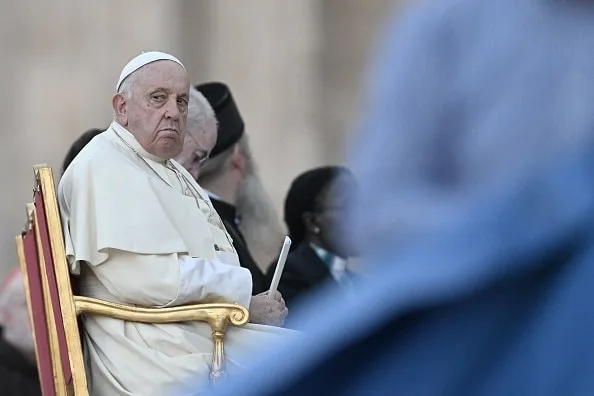
Pope Francis who arrived at the Vatican and as the head of the church, has made pronouncements and taken actions that seemed at variance to the traditional teachings of the church.
On World Youth day in Rio de Janeiro in 2013, as reported by Catholic Herald, Pope Francis said to the youths, “I want to tell you something. What is it that I expect as a consequence of World Youth Day? I want a mess. We knew that in Rio there would be great disorder, but I want trouble in the dioceses! I want to see the church get closer to the people. I want to get rid of clericalism, the mundane, this closing ourselves off within ourselves, in our parishes, schools or structures. Because these need to get out!”
His Fiducia Supplicans has encouraged the blessing of same-sex marriage; “When two people request a blessing, even if their situation as a couple is “irregular,” it will be possible for the ordained minister to consent. However, this gesture of pastoral closeness must avoid any elements that remotely resemble a marriage rite.” VaticanNews explained. This has set off the desired mess.
The Catechism of the Catholic Church, as quoted in Commentary on the Responsum ad dubium, states, “According to the teaching of the Church, men and women with homosexual tendencies ‘must be accepted with respect, compassion, and sensitivity. Every sign of unjust discrimination in their regard should be avoided (2358).”
Apostolic Exhortation Amoris Laetitia indicates in n. 250, “so that those who manifest a homosexual orientation can receive the assistance they need to understand and fully carry out God’s will in their lives”. Yet in n. 251, it states, “the Synod Fathers observed that as for proposals to place unions between homosexual persons on the same level as marriage, there are absolutely no grounds for considering homosexual unions to be in any way similar or even remotely analogous to God’s plan for marriage and family.”
“The family and life form a real unit which must be protected by society because this is the living nucleus of the succession (procreation and education) of human generations. In today’s open and democratic societies, the State and the public authorities must not institutionalize de facto unions, thereby giving them a status similar to marriage and the family, nor much less make them equivalent to the family based on marriage.” As contained in the Pontifical Council for the Family: Family, Marriage and De Facto Unions. The state has long worked to institutionalise the union.
Read Also: Inclusivity in the church
After these forth and back interventions and interpretations by the Church, it was rather surprising, without any conclusion on the subject, although Pope Francis had since indicated his perception early enough but that had been considered his personal opinion but Fiducia Supplicans is different. This is a document of authority showing the way of the church. This has not gone well with the Catholic world. The Priests and the faithful have risen in support of or in condemnation of, as some are indifferent.
The universality and the unity of the church is threatened.
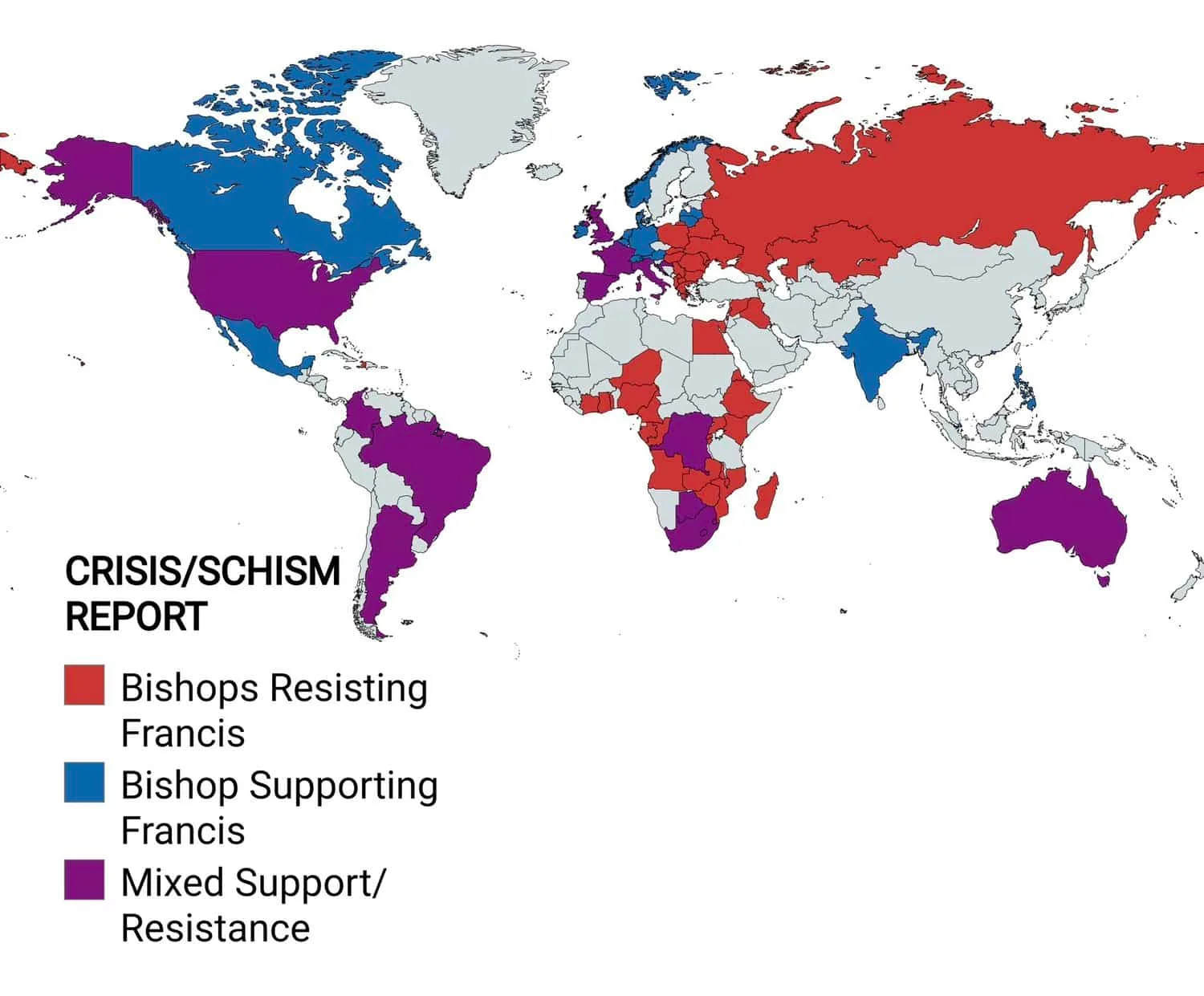
Countries upon countries of Catholic congregations are stating their opinions. Bishop Athanasius Schneider who referred to the document as “a mockery of the natural and revealed law of God, also stated that “As anyone paying attention to the situation can see, the debate has only begun. But perhaps creating a state of permanent debate, generalized uncertainty, and doctrinal and practical anarchy, was precisely its aim.” Cardinal Gerhard Müller stated that “blessings” of homosexual couples constitute “blasphemy” and that the document is “self-contradictory.”
As opinions continue to come, the opinion of the College of Cardinals will be important as that will determine the future of the Conclave and the successor of Pope Francis.
The church is currently at war; liturgically, psychologically and magisterium. It calls for the rejection of the document, questions the authority of the Pope and resisting of his certain ordinances going forward. But, the raging debate also can bring unity, more understanding within the church.
“Unity of teaching and practice is certainly necessary in the Church, but this does not preclude various ways of interpreting some aspects of that teaching or drawing certain consequences from it… Each country or region, moreover, can seek solutions better suited to its culture and sensitive to its traditions and local needs.” Apostolic Exhortation Amoris Laetitia.
When the confusion becomes unresolved, it could lead to the disintegration of the church, in fragments, according to continents or according to countries. This may not bode well for the church depending on the final outcome of this debate. The church needs healing and to retain its status as “the church of the living God, the pillar and bulwark of truth”. This question of same sex marriage should be kept in the civil spaces and not within the church, otherwise this war in the church will end in ‘doctrinal and practical anarchy.’ – a legacy of Pope Francis.