
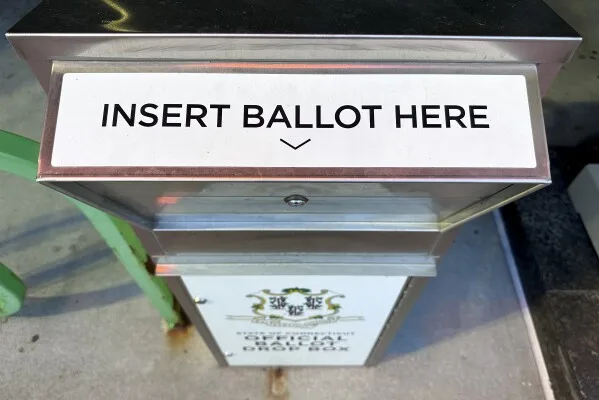
If voting alone could guarantee liberation, Africa would already be the destination of the world. It would already be the wealthiest continent on Earth. As it is, Africans have become pawns on a continent where the rules are written in a language of poverty and dependency.
We are often told: 'Wait for the next election cycle. A new leader will solve the problems. Voting is the only power.' It’s a constant call. But across Africa, while we wait for elections in order to change our lives, sit-tight leaders become busy entrenching their power, widening their control over our survival, and telling us to 'have hope and exercise patience.'
Liberation does not come from a polling station in Abuja or Nairobi as we have experienced over time; it is forged in the markets, built in our communities, and demanded in every organising.
Let’s explore the path to African Liberation. It rests on the two pillars that these leaders - and those who control them - fear the most: Economic Independence and People Power.
Previously, we looked at the ballot traps which include: the ‘stomach infrastructure, and the manipulation of poverty and weaponising same, as one of the traps set by these leaders who often campaign on fixing the problems but when ‘voted”in, they loot funds to pursue personal ambitions and entrenchment, rather than to fix the problems and lift the people out of poverty.
When poverty is created and reinforced, dependency is created and through that, the promise keeps coming up on every election cycle - and yet, remains unsolved.
In 2023, millions of Nigerians stood in line for hours in hope and belief that through voting they would change Nigeria. They made all efforts, enduring heat and system glitches, believing these efforts would rescue the Nigerian state and its economy, cure poverty and dependency, but the system struck. The election was bought and manipulated, the digital system broke down blocking vote count and the votes, as announced, were not believed to count. The judiciary then upheld the announced result. What followed? The Naira crashed to historic lows, fuel subsidies disappeared on presidential inauguration day, and the cost of food, goods doubled and inflation rose with high insecurity. The poverty of the people was secured. Many deaths on a daily basis. Yet, the Nigerian government walks past these problems only to focus on the next election - to promise the same thing.
This is not just the tragedy of Nigeria. It is the tragedy of the continent. It is a similar story from Darka to Gitega to Pretoria. It is a system that was not designed to empower the people. It was designed through certain policies and laws to centralise power and wealth at the top in total neglect of the plights of the people.
As poverty becomes weaponized, elections become an auction. The politician does not need to present his ideas and convince the people of what he intends to achieve. They don't need to perform; they don’t need to improve lives, create opportunities for economic growth, they just need to buy power through the individuals in charge of elections, buy the institutions and buy votes on election day with a loaf of bread, a sachet of salt and small bag of rice and including few notes of cash, and additionally, pit ethnic groups against each other. They just want to continue to perpetuate poverty, for their benefits. When the people stand in the line, it is a testament that they have justified the election after all, it is a civic duty. By the time people realise the trick, the politicians are safe inside their fortified government mansions for another four years.
We cannot vote our way out of a system designed to keep us down even though voting is the legitimate way.
Read Also: Africa’s hollow independence
So, what do we do? How do we fight our way out of this quagmire? Let us explore the pillars.
If the system uses poverty to buy the silence of the people, then our first act of rebellion has to be making sure they can no longer afford us. That’s why Pillar Number One is Economic Independence
In Nigeria, as a developing economy struggling with high inflation and currency volatility among import dependency, with government revenues relying on taking unending loans, the informal sector and petroleum as the only sector gaining foreign currency, these expose the citizens to shocks and vulnerabilities.
It may seem hard to get the ignorant citizens to think beyond the stomach infrastructure, who often believe that election is the only time they can get anything from the politicians. When survival is key, a bag of rice, a loaf of bread, a cut size of meat or sachet of salt, and 2000 naira can easily buy people's obedience and their votes. We then trade four years of our future for a single loaf of bread.
If the leaders control electricity, distribution of goods and services and through policies, they also control people's obedience.
To stop this, the people must first be armed with information and knowledge. Ignorance has become the potent weapon of these leaders which explains their attitude towards funding education in Africa.
The people must invoke their entrepreneurial spirit. When the shop owner in Onitsha, or the market women in Freetown are economically independent, they cannot be intimidated or bought. A loaf of bread will no longer serve as a bait.
Economic independence is the bulletproof vest of election manipulation and a path to liberation. True liberation means stripping them of that leverage to control the mind of the people. But, yet, even with money in our pockets, we are still vulnerable standing alone.
This brings us to Pillar Number Two: The People Power. But let’s be clear, the People's power is not just marching in the streets; it is a day-to-day community organising by bringing people together with shared concerns, building collective power and taking action. It involves listening to the concerns of the people, connecting through unions, church groups, and traditional associations. Then map out a long term strategy to challenge the status quo through democratic and pressure tactics within the law. The organising will be built leaderless to avoid infiltration and crack-down. The thing governments fear most, is a leaderless movement which is the people's strongest shield.
It may sound utopian and dangerous after all, the EndSars could still be fresh in the mind. Or the people who poured out their mind and soul to secure election win in Nigeria in 2023 but saw their efforts trampled by the malfunction of the IREV and judicial collusion. It was disheartening indeed. But the efforts succeeded in sending the message.
The Sudanese succeeded to oust the sit-tight Omar Al-Bashir following months of sustained anti-government protests. The pressure campaign may not basically involve being in the street for fear of the government's dangerous approach. It could involve nationwide sit down resistance that can force greater changes and the transfer of social power back to the people.
When the state fails to provide security, leaving citizens vulnerable to banditry and kidnapping, it will take ages waiting for the federal forces. True liberation comes from local, decentralized networks, funded by the people, answerable only to the people, and clean of state corruption. When the movement is an interconnected network of ordinary citizens, it becomes impossible to stop.
The rulers of African nations have shown they do not fear the ballot box which they have mastered and know how to manipulate. What truly terrifies them is an African who they can no longer manipulate and control through poverty.
The actual Power does not reside in Aso Rock, and it never will. It resides in the auto hub of Nnewi, the communities in Addis Ababa, the schools and the collective will of Africans from Nairobi to the Darka. Once this is understood that the voting cycle is broken, and cannot be a true path to African liberation, people will stop placing unnecessary hope in the hands of these politicians and elections but in the actual change the collective efforts will bring to the respective countries and society.
Election is where the traps lay and Africans will continue to be caught in these traps if they do not seek true liberation. It lies in the hands of the people.